


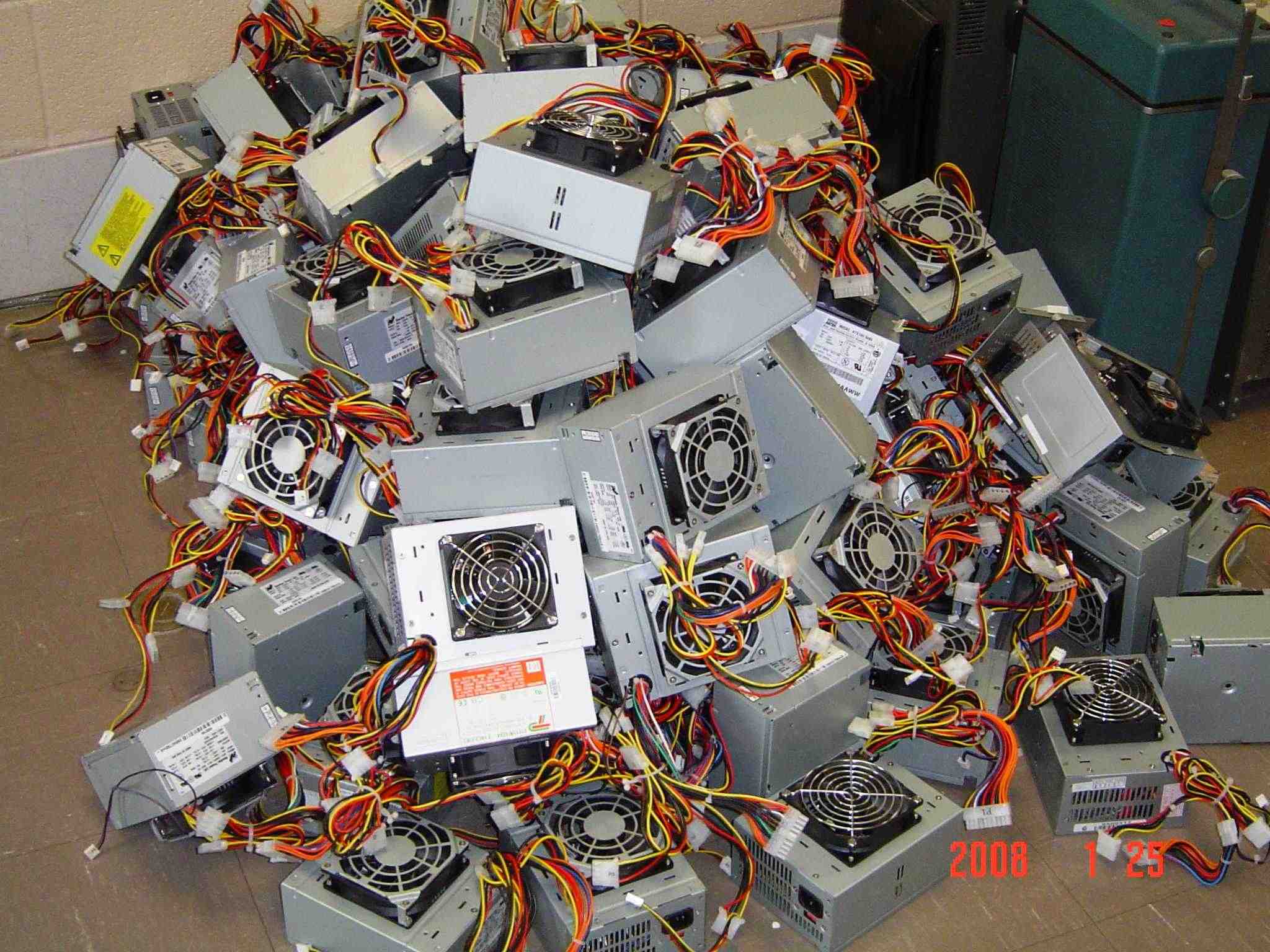


PC building in the Philippines has always been a balance of budget, performance, and trust. A builder’s experience used to be the backbone of that trust, the assurance that the machine would run well because “ganito lagi ginagawa namin.” Today, that same reliance on habit and familiarity is becoming a liability.
- When Experience Becomes an Excuse
- The PSU: The Quietest and Easiest Corner to Cut
- RAM Prices Tripled, and Builders Responded by Hiding PSU Downgrades
- A Neutral Truth: Standards Matter More Than Branding
- Cheap Builds Are Not the Issue, Hidden Compromises Are
- The Bottom Line: Do Not Let Cost Pressure Justify Hidden Weak Components
The freelance builder ecosystem runs on thin margins and quick turnarounds. With PC part prices spiking, especially RAM, which has nearly tripled since early 2025, some builders are looking elsewhere to cut costs, and the answer has always been the same: the power supply.
In this piece, I criticize this growing issue, the hidden compromises happening in the PSU, disguised behind attractive prices and RGB-heavy cases, and often justified through “experience” instead of real hardware standards.
When Experience Becomes an Excuse
This is what triggered this article. A reader of Back2Gaming was asking for advice on a unit they were helping someone else with. While the issue wasn’t direcly a power supply related (and they did share the reason), I was surprised to see them using this as the power supply for a Core i7-10700:

This is an aptly-named MURANG POWER SUPPLY sold under the YGT brand with the sub-branding of DHAIKEN 800 watts. This product is being sold for roughly PHP500 and has this confusing marketing name. While people familiar with PSUs would most likely steer away, there are still who probably won’t. Here’s what the person said when confronted about his choice of PSU:
Naka limang pc na ko
Puro i7 10th
Pero brand new board at cpu
Gnyn psu
Wla naman
Issue
Those are five units running 10700F, meaning there would at least be a GPU to account for, as well as the total system load, which, on boost, will easily push this system past the rated 250W that this power supply can deliver. While it may not be the direct cause of the system-wide overheating that they were experiencing, it’s impossible not to be cautious as well.
Now, there is nothing wrong with seasoned builders trusting certain parts. Familiarity can speed up work and reduce troubleshooting. The problem begins when experience becomes a shield, a catch-all justification for repeating outdated or risky component choices even when the industry has already moved far beyond those old baselines.
Many freelance builders continue pushing:
- A PSU they insist has “never failed them,”
- A budget motherboard they have been using for years,
- A casing brand that conveniently fits the target price,
- Or a no-name cooler that supposedly “never gave issues.”
None of these arguments reflect measurable performance, electrical safety, VRM behavior, transient handling, or long-term reliability. They are simply habits that have survived long enough to feel comfortable.
And with the current market climate, these habits have become the easiest way to hide shortcuts.
The PSU: The Quietest and Easiest Corner to Cut
With RAM prices surging right now, something in the build must absorb the cost increase. Since clients are usually focused on CPUs and GPUs, builders know there is one component they can quietly downgrade without anyone questioning it: the power supply.
Cheap PSUs have always existed, but the current situation has allowed them to flood the market again. Freelancers trying to hit a target price often slip in:
- Generic 600 to 750W units that cannot pass basic load stability tests,
- Models with fake wattage labels,
- Designs without proper OCP, OPP, or OTP protections,
- Outdated group-regulated platforms dressed up as “gaming” PSUs,
- Rebrands of rebrands with no traceable OEM.
The familiar excuses follow:
- “I always use this.”
- “Stable naman yan.”
- “Wala pa bumabalik sa akin.”
These are not standards. These are not results. These are shortcuts.
Modern GPUs can spike to two or three times their rated power draw. Motherboards manage increasingly aggressive boost behavior. SSDs pull more power during burst writes. None of this can be handled safely by a bargain-bin PSU, no matter how confidently a builder shrugs it off.
RAM Prices Tripled, and Builders Responded by Hiding PSU Downgrades
DDR5 prices have climbed sharply throughout 2025 due to supply constraints, contract pricing adjustments, and increased demand for higher-capacity modules. Retail reacted quickly. Freelance builders, pressured by customers stuck on last year’s “₱X budget build,” began adjusting the one part buyers rarely inspect.
The PSU.
Other corners also get trimmed, such as VRMs on the motherboard, storage quality (lol fake Samsung SSDs), or cooling. Still, the PSU remains the most convenient place to hide a cost reduction.
The result is a system that looks like a deal but behaves like a gamble.
Months later, the problems begin:
- Random shutdowns,
- Stuttering under GPU load,
- SSD throttling or disappearing temporarily,
- VRM temperatures spiking without warning,
- GPU resets,
- Motherboard failures that appear to be “bad luck.”
All of this traces back to a builder protecting the price tag instead of protecting the customer.
A Neutral Truth: Standards Matter More Than Branding
While I’m indifferent to a “PSU Tier List” and believe that buyers should further research their purchasing decisions, it does give a shortlist of possible options. Albeit with the needless snide comments from cultists who have made it their life mission to spread the word of their “tier list”.
Kidding aside, the tier list will mostly be populated by names like FSP and Seasonic in the upper range, with their OEM counterparts represented by products from brands like Corsair, ASUS. From a strictly engineering and reliability standpoint, the first-party OEM brands are a top option. Some of them may not be the type of company that dominates gaming hype, but some do. Some have strong partners.

For instance, Seasonic bleeds good rep to their budget model,s but not all Seasonic models are made by Seasonic, as they also outsource manufacturing of select models to other manufacturers. In contrast, FSP is one of the few power supply manufacturers that still build most of their platforms in-house and has managed to make a stronger name for themselves versus their standing 10 years ago.
This consistency has value.
When freelance builders talk about choosing parts based on “experience,” These OEMs are some of the few companies whose long-term track record is backed by real test results, measurable electrical stability, proper protection circuitry, and transparent certification practices. Even their budget models follow the same philosophy of maintaining safe design fundamentals instead of racing to hit the lowest possible price.
This is not about promoting a brand. It is about pointing builders toward components that do not hide shortcuts, especially in a time when reliability is being sacrificed simply to make a build look affordable.
Cheap Builds Are Not the Issue, Hidden Compromises Are
There is nothing wrong with a budget build. Entry-level systems will always have their place. The issue is transparency.
A client approving a budget limit should know where the compromises are being made:
- A lower-tier CPU is fine.
- A mid-range GPU is fine.
- Smaller storage is fine.
- A simpler case is fine.
A compromised PSU is a risk, and even without the looming threat of RAM price spikes, it’s a gamble on your PC.
When builders hide a weak PSU behind a clean-looking price, they are quietly transferring risk to the customer. And when that PSU fails, the damage rarely ends with just replacing the PSU.
The Bottom Line: Do Not Let Cost Pressure Justify Hidden Weak Components
PC parts may be getting more expensive, and RAM prices may be at their worst levels in years. That does not excuse sacrificing reliability to maintain a specific build price.
A responsible builder should:
- Adjust the build honestly,
- Educate the customer instead of tricking them,
- Recommend safer parts instead of cheaper substitutes,
- Protect the PSU as the foundation of the machine.
When builders cut the PSU first, they are not staying competitive. They are sabotaging the customer’s investment.
This practice needs to stop.


mukhang mapapamura ka sa power supply na yan sa pic.
Phanteks power combo comes to mind para puwede gumamit ng 2 murang reliable 2nd hand psu
800W
Rated 250W
12v 180W
3in1 pla yan.
10000% true
Last Tuesday night I couldn’t find anything interesting to do and started looking for new options online which eventually brought me to spin mama casino. What surprised me was how clean the platform is and how well the bonuses suit players from Australia. After a string of bad luck where nothing seemed to pay I decided to go a bit higher and hit a good combination on one of their jackpot games. That single spin changed everything. It has become my favourite way to relax after work.