



Introduction
There is no shortage of headphones claiming to deliver great sound and pro-level features, especially in the DJ space. The OneOdio Studio Max 1 Wireless is one of the newer options on the market that aims to stand out, packing things like low-latency performance, high-resolution audio support, and a battery life built for long listening sessions. However, let’s keep in mind that specs always sound good on paper, and that the real question is how they actually hold up in everyday use and in real-world performance.
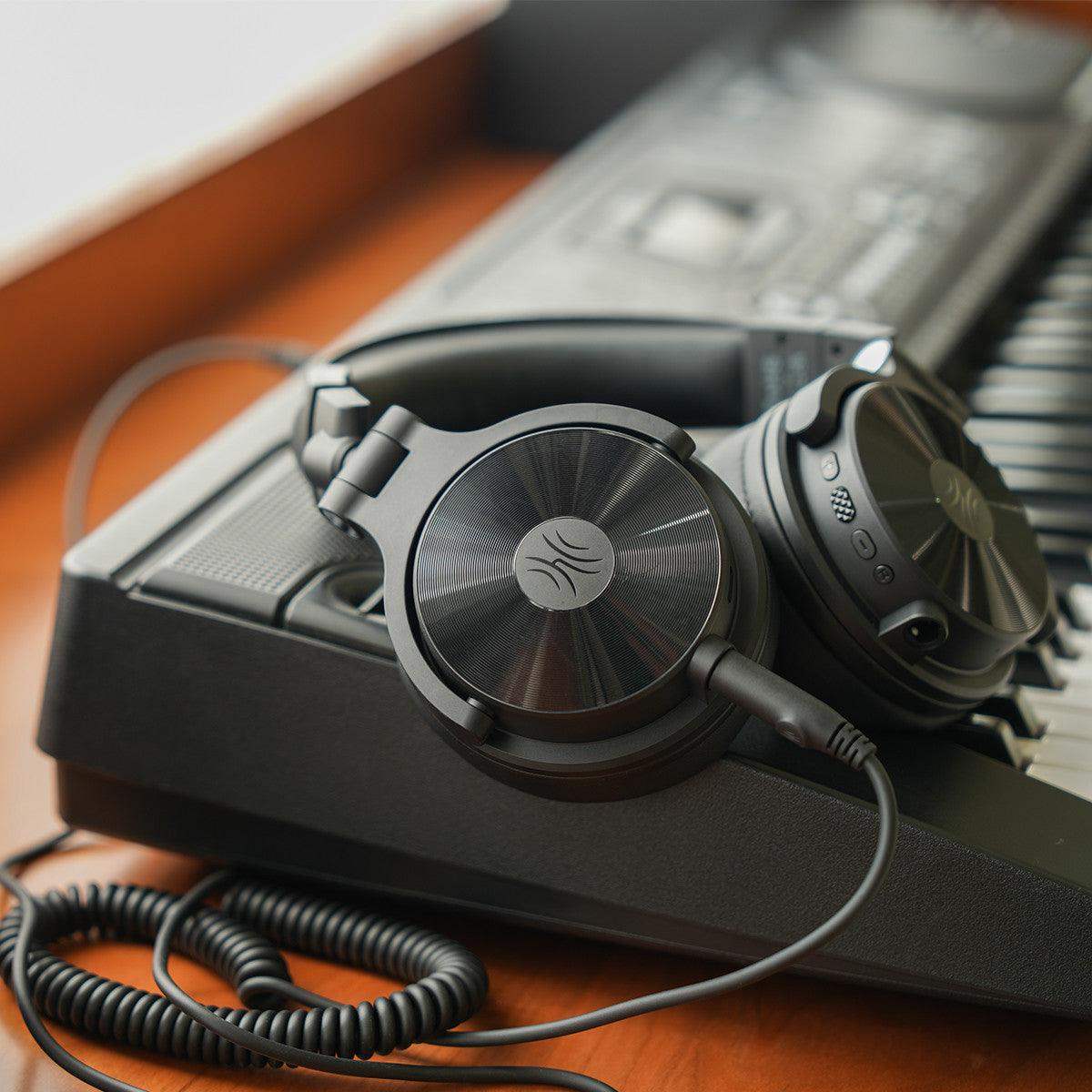
Features & Specifications
- Operating Frequency: 2402 Mhz – 2480 Mhz
- Battery: Lithium-ion | DC 3.7 V | 1000mAh | 3.7 Wh | 120 Hour
- Sensitivity: 98 dB +/- 3 dB
- Frequency Range: 20 Hz – 40 kHz
- Driver: 50 mm
- Impedance: 32 Ohm
- Wireless Range: > 10 m
- Mic Sensitivity: -42 dB +/- 3 dB
- 4 Modes: With Transmitter | 3.5 mm Interface | 6.35 mm DJ Interface | Bluetooth
- Audio: LDAC | Hi-Res
- Wireless Latency: 20 ms
Where To Buy

20% Code: back2gaming
Unboxing (What’s Inside the Box)
Starting with the packaging, it is a thoughtful and sturdy box, not the bare cardboard you sometimes get with budget gear.


Inside, everything has its place, headphones nestled safely while inside a plastic package, the same can be said to the transmitter, cables and dongles arranged neatly and have their own boxes, and an enevlope that contains the user manual and warning phamplet to locate.


When you lift the headphones from the tray, you’ll find:
- The Studio Max 1 headphones themselves
- One USB-C charging cable
- A low-latency transmitter dongle (M1)
- A coiled 2 m audio cable with 3.5 mm to 6.35 mm ends
- A standard 3.5 mm cable
- Carry pouch or soft case
- Quick start guides and paperwork
This assortment means you’re ready for nearly any setup straight away, including DJ decks, studio mixers, mobile devices, and laptops with no adapters to scramble for. That level of readiness is appreciated, whether you’re heading for a gig or updating your home audio station.
There’s a quality feel to its presentation, clearly designed for those that seeks great quality from a headphone and DJs who want a ready-to-go kit without sifting through a tangled mess of components.
Closer Look (Build Quality & Design)


Physically, the Studio Max 1 is unmistakable: bold, substantial, and unapologetically DJ-oriented in terms of build. The earcups are large, fully padded, comfy and soft, and rotatable. A practical feature for cueing one ear during a set, and it doubles as a way to fold them flatter for storage. Metal hinges and a decent amount of reinforcement provide durability that can withstand regular use in a studio or stage environment without creaking at every adjustment.
That said, the overall weight is noticeable. So, prolonged sessions may or may not cause any forms of fatigue. Controls are neatly integrated onto the earcups and are easy to reach without taking them off. Buttons handle volume, track navigation, and mode switching between Bluetooth and low-latency wireless.
Audio Performance (Sound Quality)
In general use, the headphone offers 3 different modes namely Wired or Analog, Bluetooth, and the Low Latency Wireless Mode via the M1 Transmitter.
Wired (Analog)

In wired use, whether via the standard 3.5 mm lead or the larger 6.35 mm DJ cable, in my personal experience, the bass tightens, the mids open up a bit, and the overall sound feels clearer and more controlled. Its bass-forward response is quite punchy and engaging, making genres like electronic, house, hip-hop, or techno fun to listen to. However, if you’re coming from reference-grade studio cans, you’ll notice the mids aren’t as upfront, and the treble isn’t particularly extended. This gives the Studio Max 1 a less “neutral” sound but adds a vibe that’s enjoyable for DJs and casual listening alike. However, if you’re just a typical user and not someone who goes deep like audiophiles, then you will barely notice any issues at all.
Bluetooth (Standard Wireless)
In regular Bluetooth use, including LDAC codec support, the Studio Max 1 behaves as you’d expect from modern wireless headphones. Pairing is fast and stable, the connection rarely drops, and LDAC unlocks high-resolution audio that sounds fuller and more detailed compared to standard Bluetooth codecs. Still, there is some wireless latency if you’re just using Bluetooth with your phone or tablet, so for video editing or gaming, you’ll notice a slight delay, but almost barely. Casual video watching and music listening work just fine, though.
Audio quality, on the other hand, is superb. Far better than when using with the cables. One additional feature that you can only use when in wireless mode is the volume control.
Low Latency Wireless Mode (Dedicated Transmitter)

Here’s where the Studio Max 1 distinguish themselves in the crowded wireless DJ market. The included Rapid WiLL+ wireless protocol delivers ultra-low latency (around 20 ms on paper), which is far better than typical Bluetooth and close enough that DJs can cue tracks and mix without noticeable delay. That’s a rare capability in headphones at this price point.


Sound quality in this mode is pleasantly desirable, with the added convenience of freedom from cables. It sounds better than wired, in full honesty, that many users won’t feel the need to plug in unless they’re doing critical audio editing and with much better devices to enhance the audio with. Real-world use backs this up: latency when connected via the transmitter is low enough that timing stays tight, even in live settings.
Final Thoughts
The OneOdio Studio Max 1 headphones are a rare hybrid: they straddle consumer-friendly features and DJ-focused performance in one package. The mix of versatile connectivity, strong out-of-the-box accessory value, and ultra-low latency wireless makes them a compelling choice for performers, hobbyists, and everyday listeners alike. One thing to keep in mind is that it doesn’t deliver reference-flat sound for critical mastering, and some listeners may find the weight a bit much for marathon sessions. But if your priority is flexibility, fun sound, and real wireless performance that won’t leave you frustrated with lag, these are hard to beat for the price bracket.

Overall, they’re a very competent headphone set for DJs and general listeners who want a lively audio experience with cutting-edge wireless tech and all of that without spending flagship-tier dollars.


