


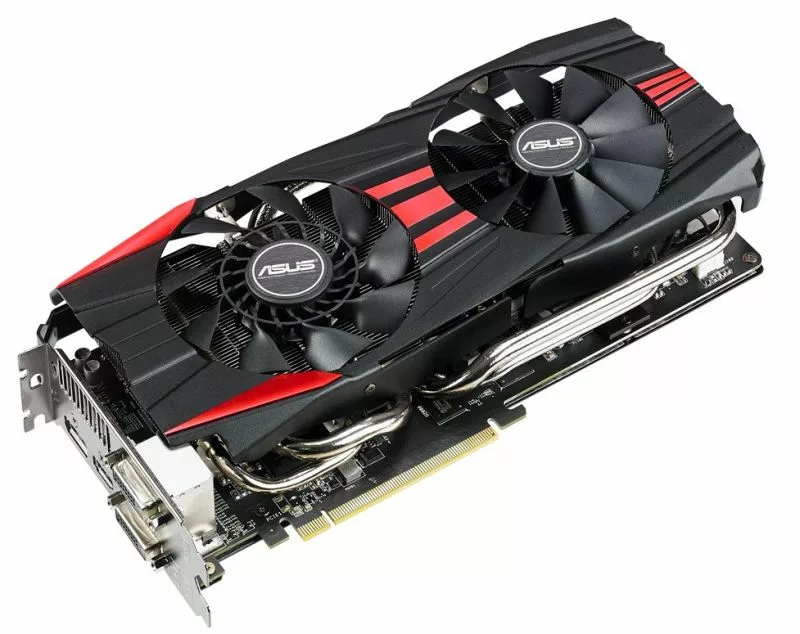


There’s been much fanfare over the high-end battles going on over between the AMD Radeon R9 290X and the NVIDIA GeForce GTX780Ti. These GPUs offer the best that both companies have to offer for gamers (Titans not included) but as with all high-end cards, there is a premium to be had. NVIDIA has mostly been a company to produce a single solution for a single market segment but AMD for the most part of the last 10 years have had success with their multi-segment product stacking.
This shotgun approach sprays consumers with a ton of options for their budget and the high-end has been pretty much a three-man dance for AMD vs NVIDIA but in this generation we’re seeing a straight 4-way with the AMD R9 290X going up against the GTX780 Ti and the GTX780’s dance partner being the AMD R9 290. In this series of review we’ll be taking a look at the AMD R9 290 and a couple GTX 780 and see how the cards stack up against each other.

The AMD Radeon R9 Series
AMD has gone with a new naming scheme for this generation of graphics card but as we’ve mentioned before in our R9 280X /270X article, the only new cards in this series are the top-end R9 290X and 290 (non-X) and midrange R7 260X. To further complicate the situation, the R9 280X and 270X are both rebrands of existing products making it seems like both AMD and NVIDIA (GTX770/760 are also rebrands) are really lazing off on development efforts in the mid-range desktop component sector.
These new cards featuring the Hawaii Island GPU bring to the table a variety of new technologies such as the Mantle API, TruAudio and DirectX 11.1/11.2. All of these technologies currently have games adopting them but that will surely change in the coming months as more and more developers adopt them in their games.
Let’s talk about specs for a moment. Starting off with clock speeds, the R9 290X will be clocked in at up to 1000Mhz. No more fixed clocks and boosts for you guys. AMD has completely changed how frequencies work in the Hawaii GPUs. More on that later. Moving on, we have memory clocks coming in at 5Ghz on 512-bit bus. The R9 290X will come with 4GB of VRAM which provide more bandwidth at slower clocks. That means overclocking the memory can really give some improvements thanks to that 512bit wide bus. CrossfireX has also been changed with the R9 290X not needing bridge cables to be able to run multi-GPU. Power is provided via an 8-pin and 6-pin PCI-e power connector.
Now for the Radeon R9 290, let’s talk about its similarities with the R9 290X first. The Radeon R9 290 retains the onboard memory size of the R9 290X, with the same 4GB of GDDR5 rated at 5Ghz on a 512-bit wide bus. The R9 290 also retains all 64 ROPs of the R9 290X.
Here’s what different for the R9 290: first up, the maximum dynamic clock speed is set to 947Mhz. The R9 290X is set to 1000Mhz as seen above. There is also no Uber Mode and Quiet Mode. At a more technical level we see the amount of stream processors cut down from 2,816 to 2,560 for the R9 290. The R9 290X has 176 texture units but the R9 290 has 160.
The ASUS RADEON R9 290 DirectCUII OC
 The ASUS Radeon R9 290 DirectCUII OC is a factory overclocked R9 290 brandishing a maximum dynamic clock of 1000Mhz, which brings it up to the speed of the R9 290X again. The memory clock also gets a slight bump having an effective 5.04Ghz clock rate.
ASUS equips the graphic card with a custom PCB with ASUS select components and cools it off with their DirectCUII cooler. The card is backed by a 3-year warranty.
- DirectCU IIÂ achieves 20% lower temps with 220% the dissipation area, plus 3X quieter running than reference.
- Exclusive CoolTech Fan drives wider airflow to keep critical components cool.
- 1050 MHZ engine clock for better performance and outstanding gaming experience
- DIGI+ VRM with 8-phase Super Alloy Power delivers precise digital power for superior efficiency, reliability, and performance.
- GPU Tweak helps you modify clock speeds, voltages, fan performance and more, all via an intuitive interface
- GPU Tweak Streaming let you share on-screen action in real time – so others can watch live as games are played.
- 4.7% faster game performance than reference Radeon R9 290X in Metro Last Light




Hi, in the 3840×2160 section of benchmarks, the subtext in the image says 1920×1080. I’m a bit confused. good review tho
Let me check on that. I flubbed the titles on the GTX750Ti, too so I know I missed on another one. Thanks for pointing that out.
So the 290 isn’t top end? lulz
290X is still top dawg and 780ti is the baddest boy in the block unless we’re counting Titan land
Titans ¬______¬
Just wish I had another £1000 spare right now for a 2nd 780 Ti and either 2 more BenQ XL24411T or XL2411Z monitors or a nice 4K panel :P
Waiting on a fan to arrive so I can clean out my dads computer and my own and swap the PSUs around.. I have more need of the Seasonic 1000w platinum now than he does :P